Comparing Meerkats with Meerkats.

Did you know that you really can compare meerkats at Compare the Meerkat?

compare-meerkats_01

Those of you who didn’t know about this already, should know I have a thing for Alexander Orlov, and now I can indulge that thing with downloads and ring tones.

Now if only he could be reincarnated as my Google Assistant…


Every rose has its thorns…

I made the mistake this week of “upping my game” and attending two tech events that the experts hosting them described as “entry level.”

Unless post graduate, PhD, or decade-plus experience counts as the new “entry level,” they definitely were not “entry level.”

At one event, I hoped to understand the state of play with machine learning, specifically, its approach to causality. Without going into a yuge amount of detail, causality has huge implications for AI, decision support, risk management and crisis response management and the planning thereof, assuming it actually works. So, does it?

I was informed that this would be “the Wikipedia article version” of said subject, and I probably grasped about half of what was said.

I’m going on the record with my disappointment that data analysis still rests on statistical assumptions, that I don’t want it to rest on.

I want real data. Thanks.

If machines are programmed to work things out the way we already do given our existing limitations, such as our assumptions, then they’re only thing to make the same mistakes that we already do, on a larger scale.

At the second event, (which was the first chronologically speaking) it’s difficult to know who the audience is.

I appreciate that information technology operations are highly detailed, and constantly changing, but I’m not the only one here sitting in total dumb-foundedness at the monotonous monologue that issues from the presenter’s mouth, (never an effective move). We sit through whatever this is without the examples that were promised making this tedious and effortful. There is no reason that the words that are tumbling out have been chosen and if the configuration of Azure has been done correctly then a lot of this noise is unnecessary as it won’t let me deviate or depart from the process flow.

I grasp the idea of “virtual machines” and also containers, and the difference between them, and why you might choose one and not the other, by googling the answer.

I grasp that Azure is Microsoft’s cloud storage product, several times over (but not much else,) and the chairs we’re seated in, at this brand new HQ, are so wildly uncomfortable that my backside goes numb in record time, forcing me to have to sit to one side and then the other. (As a rule, I wouldn’t normally admit to any bodily discomfort at a public function, least of all in a public forum, but this was remarkable.)

Get rid of the chairs! Their backs flex.

At least one of the challenges facing technologists, (and confronting me as a communicator, on a regular basis,) is the unfortunate habit of re-purposing words that already have a popular meaning, to mean their opposite, (for example ‘hack’) or something that they just do not mean, for example ‘policy’.

(Sidenote. Dear IT industry. Is there an app for coming up with new words, perhaps using Greek, Latin, or Norse, or some non-US English modern language roots, that you might be able to deploy to make new meaning-filled, technically accurate words?

For inspiration, please refer to ‘The Surgeon of Crowthorn’ and the method etymologyists use to unpack and come up with word forms. Thx)

More than once my purpose on a project has been to explain in lay terms how the information system either is or isn’t going to work the way that management thought it might, whilst co-designing the human, manual, prerequisite inputs, interim and subsequent steps and workarounds that make up a process workflow.

In that role, in an Azure environment, I would be at pains to explain that what I.T. means when it uses the word ‘policy’ does not meet the test of a policy is, and that what they’re describing as a “policy” is at most”a business rule.”

I work in government environments. As you might imagine, they already struggle with ‘big p’ and ‘little p’ policy, by which they mean

  1. public policy: “we shall have a transport system funded by taxes and administered by departments” and
  2. corporate policy “Employees are responsible for securely holding their ID pass, reporting its lost and not allowing its misuse”.

A policy, big or little, is a statement of principle.

As examples go: ‘Thou shalt not kill’ is a pretty good one. (Also, fairly universal. It doesn’t need to be a law for people to go, hey, yeah, I can remember not to do that.)

‘Be a good person’ is another one.

Don’t misuse the corporate resources is another.

Public or corporate, policies are like the Ten Commandments, both in the sense of portent and serious consequence they convey, and how few of them one requires.

I am afraid, my dear Microsoft, that a list of permitted websites and a second list of prohibited ones, are not in any meaningful sense of the word a ‘policy,’ let alone two separate policies.

What they are, is a set of dot point specifics made pursuant to IT security rules, and the higher level principle, or policy that we don’t allow staff to access inappropriate content, whether that content is illegal, obscene or malicious, or only prospectively so.

If you would like help in defining your business rules and mapping these to policy, as part of your corporate governance and its technical manifestations, I am available for hire.

 

Online resource: visualising global credit risk

For those of us following the Haynes Royal Commission and wondering just how badly off things might be, unimelb has a recorded a lecture all about that.

Visualising global credit risk


New and improved: Tech and the city calendar

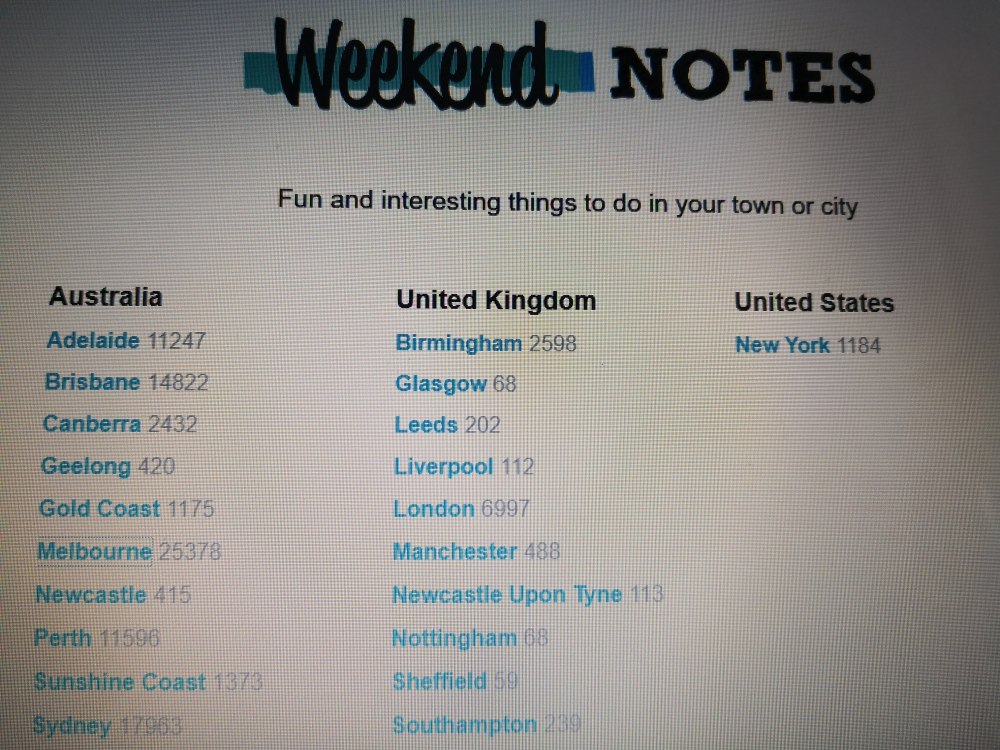
I created a Tech and the City Calendar for digital nomads and corporates wanting to know what’s on in Melbourne.

If you’ve ever wanted to a quick, easy introduction to AI, blockchain, bots, UX, UI, lean start ups, Agile, accelerators, brain science, digital ethics, design thinking, public policy debates, future of work stuff, maker spaces and how to do things like make a web site, be a photographer, record music, scan your photos, print 3D objects, program computers, how the law works, or some kind of one to one digital coaching, these are all freely available to you in Melbourne.

Don’t believe me? The stats don’t lie, and the calendar is updated daily.

cof

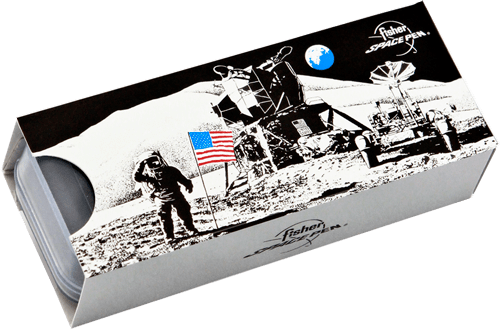
Did NASA spend millions on a space pen?

No. But they did buy some pretty fancy pens.

Read the full article from Scientific American here

Thanks science!


The Digital Human: CSIRO Sci+Tech in the City Series IV: Report

Did you know that in fifty years time you’ll probably have a full sized 3D print out of yourself?

This is the second time in a week that someone has said to me that “in the future” I will be 3D printed. That we will all be 3D printed, and that this will be for medical purposes… well that’s what they think.

Twice in a week is at least two more times in a lifetime than I ever reasonably expected to hear somebody say anything along these lines. Time to look at it seriously then.

The story goes that two Melbourne engineers and a surgeon, with a penchant for not paralysing people’s faces, have collaborated in what amounts to their spare time to create a new, highly scaleable, truly disruptive venture bringing just in time manufacturing to the production of replacement human body parts. This feat was achieved in little over two and a bit years, in what seems to have amounted to little more than their spare time.

I feel like an underachiever…

In the future, prostheses for your various bits can and will be printed on demand, tailored to your physiology and you and your surgeon can practice fitting said bits to 3D printed you, before moving on to the real thing.

Yowser!

Rightly or wrongly, I can’t help wondering whether the board game ‘Operation’  has been the inspiration, and whether, in the future, I can upgrade to a version of me that’s able to substitute at work and parties (‘Surrogates‘ styley) and/or complete domestic chores while real me takes the day off to practice surgical procedures?

Less whimsically, the health network business improver in me smells disruption. If I had money to invest in this I would

From go to woah: the team dreamt up, drafted, prototyped, cadaver tested and then successfully implanted a 3D printed titanium jaw bone that was the perfect shape and size for the recipient, and custom-made to avoid nerve damage in such a short space of time that the major impediment to widespread global uptake is the time it will take to prove that over time this is a better, smarter option than the small, medium and large off the rack options currently being used.

This is a lean mean, efficiency gain, a risk minimiser and a medical advance in one feel swoop.

It’s  just in time manufacturing. For body parts.

I’m impressed by the implications for hospital budgets, equipment and inventory, and I wonder how I can insert myself into this to make it happen.

I contain myself and I don’t ask any of my more flippant questions including whether jaw prosthetics could be made in glass and if this would be a good thing. (I’m not a doctor, but I do believe that glass is inert. Which begs the question, would the material live up to its reputation or not?)

Key note @ Testing Grounds

Deakin University Anthropocene Campus

I managed to arrive at ‘The Digital Human’ only a little bit late, due to being at one of the most fascinating exchanges about the role of humans and the ethics and occasional success of human interventions in the environment that it was possible to witness.

As part of “M/Others and Future Humans an art exhibit curated by the Laboratory for Aesthetics and Ecology and The Multispecies Salon. Motherhood is being transformed in times of environmental crisis, rapid population growth, and technological innovation. Genomics, biotechnology, and robotics are transforming mothers, babies, and dreams about the future. Emergent technologies are changing what it means to be human” a synthetic biologist (Claudia Vickers) and an award winning artist (Patricia Piccinini).

More about that later, but bringing the arts and sciences together is one of the dominant themes of events in the Tech and the City Calendar.

——————————————————————————————————————————-

Digital Humans was co-presented by CSIRO Data61, Risklab Australia and the Australian Society of Operations Research

THE DIGITAL HUMAN

Simulation modelling of the human body and its internal processes is a fascinating topic and there’s a wealth of applied research expertise across Melbourne. Sci+Tech in the City this week has four speakers covering sports performance, rehabilitation, food and digestion, and workplace safety: Kay Crossley (Latrobe University), Dan Billing (DST Group), Peter Lee (University of Melbourne) and Simon Harrison (Data61).

Register here