eHealth A real-world look at how to implement digital workflows into clinical practice – 18 September 2018

One for the health practitioners,  the health administrators and the moderately curious about the future of healthcare. Centres on dentistry, but the principles of transformation are the same. Sales have ended, but fun fact: fifty per cent of sign ups to free events in Melbourne are no shows. If this floats your boat then contact organisers or just turn up and try your luck.

Details here

“Will Robots Eat Our Jobs?”

Happy 136th Birthday RMIT!

With a subject as enticing as “will robots eat our jobs?” I found myself mid-morning at RMIT’s green-slimed Storey Hall, expecting a bit of a lecture.

What I got was more.

A whole lot more.

Not only was it the University of Technology’s 136th birthday party, but there was molecular gastronomy on offer.

My goodnesss. It was eye-opening and mouth watering.

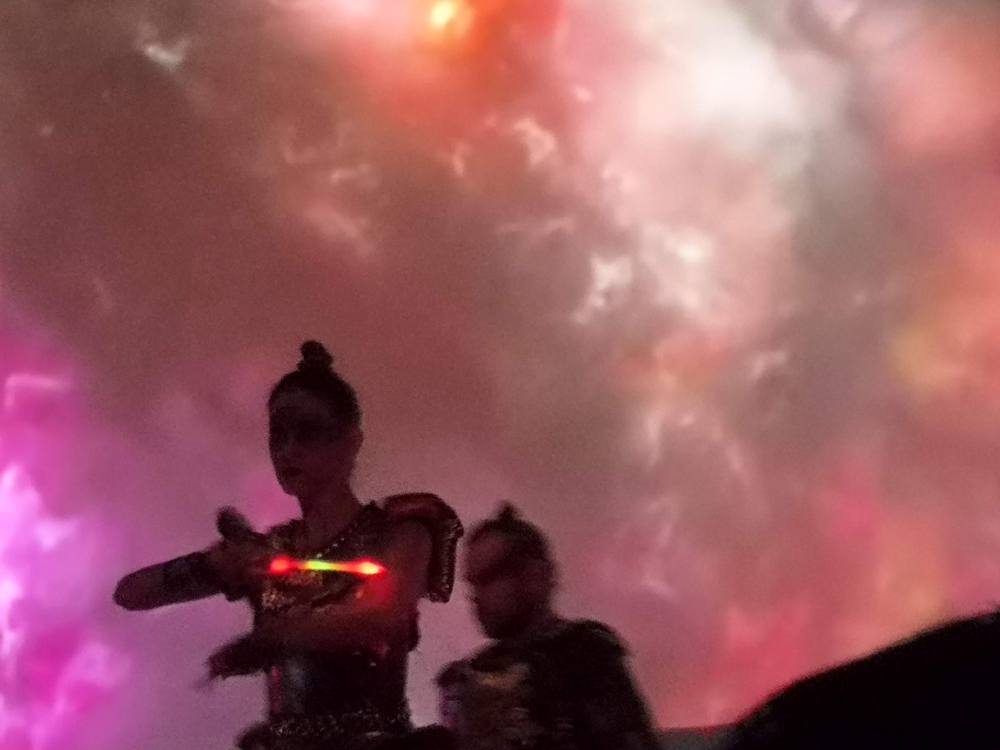
From the cater waiters dressed as Pris from ‘Blade Runner‘ to a thirty minute roller skating extravaganza that was part ‘Xanadu‘ and part ‘Starlight Express’, to a panel discussion involving the most animated university Vice Chancellor put on this green earth (Martin Bean) introducing a whole new word to the lexicon.

Meet “micro-credentialing”.

In a world in which you have multiple careers, a freelance economy, and ever evolving technology and capability, it’s exactly what the blog is aiming to wean you onto. Constant short bursts of self development.

Since introducing the concept, RMIT has delivered over 8,000 of the blighters, with the aim of creating a ‘pick and mix’ option for students and return-to-study types, but if you’re not sure you want to commit to these just yet, you can access the blog calendar, or sit at home and try some online offerings like Coursera or the number one educator in the world which I am surprised to learn is ‘YouTube.’ (I mean I get it but I’m not sure that I’d put it in that category.)

This week alone I’ve attended a webinar on programming chat bots with Microsoft UK; a seminar on how to edit Wikimedia and Wikipedia with Andy Mabbet at ACMIT X; learned about the policy ecosystem in Australasia at UniMelb and the Modern workplace at Microsoft HQ, discovering that Australian and state governements are disconnected and seem not to have invested in ways to share knowledge and colloborate on policy, and a business in regional Australia is using Microsoft 365 (the way of the future for shared services) and purely mobile solutions to deliver healthcare to seniors in rural, regional and remote areas of New South Wales.

PHEW.

Telehealth being a pet subject, I’ll be following up on Integrated Living and recommending it to my policy connections in health, tech and gov.

I also visited WanChain at Stone and Chalk who seem to be a middle ware interface or exchange type entity allowing trade between different types of cryptocurrency.

I asked them tricky questions about privacy and health data and we are going to continue the conversation.

Last but not least, I also made a new connection.  The Chief Strategist at Deloitte Australasia Robert Hiliard whose career trajectory includes an interest in letting go of the ‘digital’ descriptor in the transformation space and a short story involving a thirteen year old, a Commodore 64 and an early inventory and accounts management system created from scratch for a furniture retailer in country Victoria.

Disconcertingly, 2 per cent of Chief Executives in Australia think that technology has the capacity to seriously disrupt their businesses.

An alarming 71 per cent think that someone somewhere in the business is (probably) looking into the issue of disruption and the implications of new technologies. (Specifically “that guy with the red hair” to give an example of one of the answers supplied to researchers in response to my exact question, aka ‘who?).

This is really bad news. For so long we have promoted people to the top because of their ability to cut through, or as I prefer to see it, pay no attention to the detail. Speaking as someone who loves complexity and systems design, this has always meant my own career was never going to hit the heights but geez I’ve seen some really incompetent people rise up the ranks.

If these stats are real, Australia is headed for some nasty shocks.

Mr Hiliard is the first person to confirm my previously quietly held concerns that blockchain is “ugly” by which he means there are other  better options in the market that do the same thing better and I mean it seems to be attended by a yuge amount of hype and not a lot of information as to how it is actually better than other options.

(Example: you need US dollars to float an ICO. In laymans’ terms that means you make your digital currency out of existing currency… Why would anyone do that?)

Then there are the calls to regulate and apply the rule of law to these speculative creations, which is fine, except it doesn’t gel with my understanding of these currencies as having been created to avoid “gummint control” and tax, and allow the black market to flourish with some certainty.

So there’s that.

Finally, on the question of whether robots will eat our jobs the consensus seems to be no. They won’t.

At least twice this week the poster child for the future of humans and robots has been cited as two teams of chess players currently kicking goals on the world chess circuit (OMG. Why do you do this to yourselves, technologists?) in which the yuman and the off-the-shelf bot are working collaboratively. The machine doing the routine and predictable behavioural bits, and the creative tactics coming from the higher cognitive reasoning bits of the human’s imagination and brain. I can see how this would help risk management. Specifically my ability to reign in executives making rash decisions. However, I also note that behavioural interviewing (which is a pet hate, because it literally looks backwards, and assumes that we will only ever do what we have only ever done, which is precisely the type of work that machines will eat alive) isn’t interested in the ability of the human to have several careers and be creative. It vitiates against it. It may be what we need, but it’s not how we’re recruiting….

It begs the question whether the guy with the red hair who’s supposedly dealing with the threat of disruption actually exists or is he a figment of our irrationally positive imagination?

oznor


New and improved: Tech and the city calendar

I created a Tech and the City Calendar for digital nomads and corporates wanting to know what’s on in Melbourne.

If you’ve ever wanted to a quick, easy introduction to AI, blockchain, bots, UX, UI, lean start ups, Agile, accelerators, brain science, digital ethics, design thinking, public policy debates, future of work stuff, maker spaces and how to do things like make a web site, be a photographer, record music, scan your photos, print 3D objects, program computers, how the law works, or some kind of one to one digital coaching, these are all freely available to you in Melbourne.

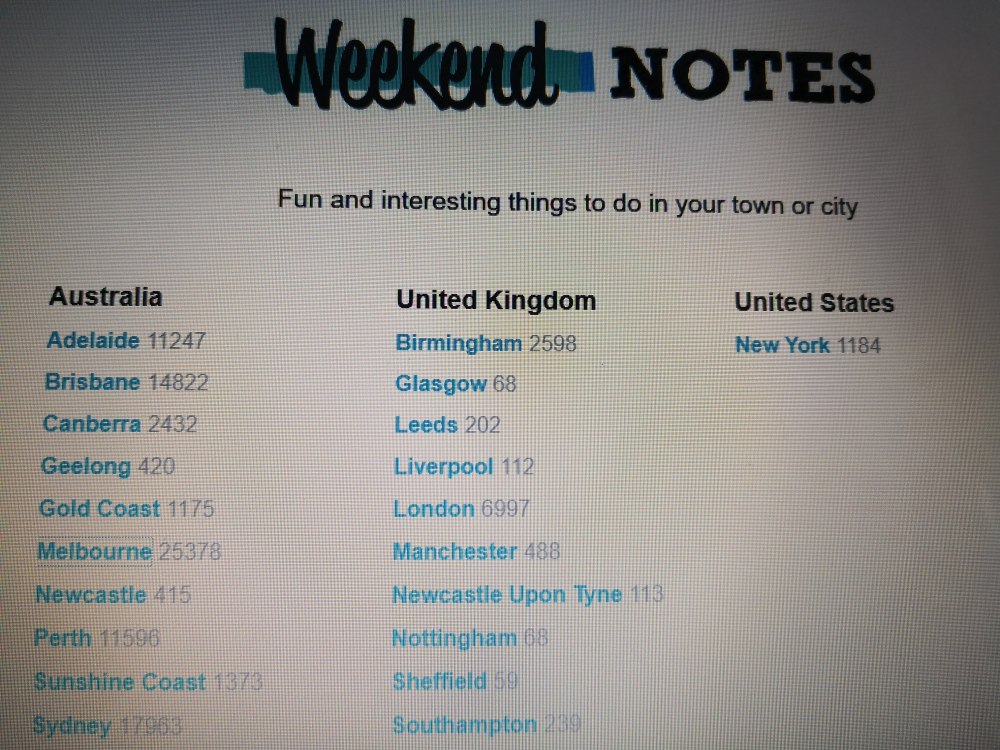
Don’t believe me? The stats don’t lie, and the calendar is updated daily.

cof

Start ups: 12 months free at CreativeCubes.Co

Space: the final frontier.

Startup Victoria are sponsoring TWENTY lucky entrepreneurs for a YEAR at Creative Cubes co-working. Start ups looking for space to work and collaborate with like-minds can pitch for space at two locations on two different dates.

Monday September 17 Richmond or Tuesday October 2 Hawthorn

you’d be mad to miss it. (assuming you’re a start up and you like free rent…)


The Digital Human: CSIRO Sci+Tech in the City Series IV: Report

Did you know that in fifty years time you’ll probably have a full sized 3D print out of yourself?

This is the second time in a week that someone has said to me that “in the future” I will be 3D printed. That we will all be 3D printed, and that this will be for medical purposes… well that’s what they think.

Twice in a week is at least two more times in a lifetime than I ever reasonably expected to hear somebody say anything along these lines. Time to look at it seriously then.

The story goes that two Melbourne engineers and a surgeon, with a penchant for not paralysing people’s faces, have collaborated in what amounts to their spare time to create a new, highly scaleable, truly disruptive venture bringing just in time manufacturing to the production of replacement human body parts. This feat was achieved in little over two and a bit years, in what seems to have amounted to little more than their spare time.

I feel like an underachiever…

In the future, prostheses for your various bits can and will be printed on demand, tailored to your physiology and you and your surgeon can practice fitting said bits to 3D printed you, before moving on to the real thing.

Yowser!

Rightly or wrongly, I can’t help wondering whether the board game ‘Operation’  has been the inspiration, and whether, in the future, I can upgrade to a version of me that’s able to substitute at work and parties (‘Surrogates‘ styley) and/or complete domestic chores while real me takes the day off to practice surgical procedures?

Less whimsically, the health network business improver in me smells disruption. If I had money to invest in this I would

From go to woah: the team dreamt up, drafted, prototyped, cadaver tested and then successfully implanted a 3D printed titanium jaw bone that was the perfect shape and size for the recipient, and custom-made to avoid nerve damage in such a short space of time that the major impediment to widespread global uptake is the time it will take to prove that over time this is a better, smarter option than the small, medium and large off the rack options currently being used.

This is a lean mean, efficiency gain, a risk minimiser and a medical advance in one feel swoop.

It’s  just in time manufacturing. For body parts.

I’m impressed by the implications for hospital budgets, equipment and inventory, and I wonder how I can insert myself into this to make it happen.

I contain myself and I don’t ask any of my more flippant questions including whether jaw prosthetics could be made in glass and if this would be a good thing. (I’m not a doctor, but I do believe that glass is inert. Which begs the question, would the material live up to its reputation or not?)

Key note @ Testing Grounds

Deakin University Anthropocene Campus

I managed to arrive at ‘The Digital Human’ only a little bit late, due to being at one of the most fascinating exchanges about the role of humans and the ethics and occasional success of human interventions in the environment that it was possible to witness.

As part of “M/Others and Future Humans an art exhibit curated by the Laboratory for Aesthetics and Ecology and The Multispecies Salon. Motherhood is being transformed in times of environmental crisis, rapid population growth, and technological innovation. Genomics, biotechnology, and robotics are transforming mothers, babies, and dreams about the future. Emergent technologies are changing what it means to be human” a synthetic biologist (Claudia Vickers) and an award winning artist (Patricia Piccinini).

More about that later, but bringing the arts and sciences together is one of the dominant themes of events in the Tech and the City Calendar.

——————————————————————————————————————————-

Digital Humans was co-presented by CSIRO Data61, Risklab Australia and the Australian Society of Operations Research

THE DIGITAL HUMAN

Simulation modelling of the human body and its internal processes is a fascinating topic and there’s a wealth of applied research expertise across Melbourne. Sci+Tech in the City this week has four speakers covering sports performance, rehabilitation, food and digestion, and workplace safety: Kay Crossley (Latrobe University), Dan Billing (DST Group), Peter Lee (University of Melbourne) and Simon Harrison (Data61).

Register here

Tea and reports: Victoria’s Social Economy and Jobs of the Future. THIS Thursday AM

VCOSS, RMIT and the Future Social Service Institute host morning tea and launch of two reports outlining the breadth of this social opportunity and economic growth.

Victoria’s social economy: Social opportunity, economic growth outlines future workforce trends and the huge demand projected for social service workers.

Jobs of the future: Victoria’s vibrant community services industry takes the latest Australian Charities and Not-for-profit Commission data and profiles key aspects of the Victorian community service sector.”

Details and registration here

Tuesday PM: Health tech: Where humanity and technology converge

He’s no Dr Ken, but he is a US doctor.

Larry Chu, MD is the Director of Medicine X, billed as Stanford University’s leading program on emerging technology and medicine. He’s also a Professor of Anesthesiology, Perioperative and Pain Medicine and Director of the Stanford Anesthesia Informatics and Media (AIM) Lab and he’s in Melbourne for the Digital Innovation Festival.

“Technology can be a great amplifier and enhancer of health care, but it’s not everything.  Here Larry talking about how to see beyond technology for technology’s sake.” But can it though?

Register here

Add to Calendar

Let there be laser scanning… Would-be land surveyors wanted.

All sorts of weird and wonderful things happen in Melbourne. This event just goes to show it.

Surveying. Not a career prospect I’ve ever given much thought to. But. If I wanted to, today would be my lucky day.

Have you ever wanted to give land surveying a burl? RMIT is offering you that very chance.

To book click here

Added bonus: You get to see all the current surveying equipment used in the industry including a digital level, total station, GPS and a laser scanner.

Return to Home

RMIT Activator incubator FREE Build Agile Teams workshop

Agile is the latest buzz word doing the rounds in management circles.

Activator is the business incubator side of RMIT hosting MBA short cuts that you can apply IRL.

Event link is here:

Sign ups: Activator Skill Up Workshop – Develop an MVP

What’s on in Melbourne.

I’ve added a huge number of events to the calendar.

This one’s an intro to Minimum Viable Products which means it will probably touch on Agile.

Book here

Free Stuff – Tea, Talk & Technology Sessions (Bilingual) – Fitzroy Library 飲下午茶學電腦談…

Multiple dates, multiple languages.

Book online here


LEDs and me. Moduware. Week one

cof

Moduware

TLDR

  • Moduware are offering free introductions to programming their tiles
  • MeetUp group meets once a month at WeWork, Collins Street.
  • Coding = language. It’s like writing a long form poem. There’s rules and spelling and syntax and grammar. If you can handle writing, you can code.

The What

My quest to attend as many cool tech events in Melbourne as I can brings me to WeWork, Collins Street, following a mad dash from RMIT Swanston Street, and the ceramics department’s annual auction of student works.

(Incidentally, I won one of the pieces that I bid on. So, it’s been a productive night.)

I’m with a friend, who may be many things, but a coder or programmer are not two of them. I tell him that I don’t really know what to expect from tonight, but a last minute check of the details of my MeetUp suggests that we’ll be sitting this one out, as I was meant to bring a lap top, as well as my smartphone, and we only have our phones.

Oops!

No biggie.

Alex Chernov is our host and there are three reps from Moduware, all keen to feed us pizza and to chat. One of them, Cato, mentions that he thinks you could eat for free in Melbourne every night, if you wanted to, at events just like this one. I agree, and I will nevermore to wonder whether I’m the only person who suspected this. They absolutely do!

I tell the Moduware crew that I think Melbourne has more, and more interesting, tech events than anywhere else in the world, (although admittedly I didn’t do the tech geek thing in Berlin or London, as I was too busy doing the ‘grown up gap year’ thing, and hanging out with friends I hadn’t seen since I was in my twenties, as though we were still in our twenties.) This left very little room to get to Berlin’s FabLab. I was too busy tracing David Bowie’s footsteps.

I tell them that Menlo Park and San Francisco’s dearth of interesting MeetUps really shocked me, and that it’s not my imagination that my hometown has some cutting edge events, and thoughts, and agendas that I never expected it to have. At least, not in a competitive / comparative sense, As any number of Americans and Europeans pointed out, Melbourne is the arse end of the arse end of the world and ‘so very far away.’

Ugh.

Alex wants to know how much I understand about the subject matter, and I tell him I know more than people give me credit for.

As a middle aged woman, without a tech degree, (thank goodness) I understand the assumption, but we have laws against that kind of bias for a reason. These days I may look like the Mom from ‘The User is My Mom‘ but that belies the reality that I was there when the Privacy Act was a bill being read in the Parliament (the legislative equivalent of being a twinkle in your Dad’s eye) and I’m an expert in electronic transactions in ANZ.  Not to mention, that I influenced HL7 messaging and ePrescribing globally and am likely the reason that  you can even debate whether to opt in or out because that isn’t how it was originally going to be.  To show I don’t need to resort to irrelevant boasting, I mention that I taught myself HTML when MySpace was a thing. So, there’s that.

My credentials are dead set bona fide, but my colleague’s are doubtful.  I let them know that we are fine with just looking over someone’s shoulder thanks. (If hacking into HTML taught me one thing, it’s that I don’t want to be a coder. I just want to understand how coding happens, in java, and see how this new vertically integrated programmable Scala jewellery works.

Ok, so it’s not wearable. That doesn’t make it a bad analogy…

Tonight’s event is the first in a series designed to foster a Moduware user community in Melbourne.
screenshot_20180821-185721

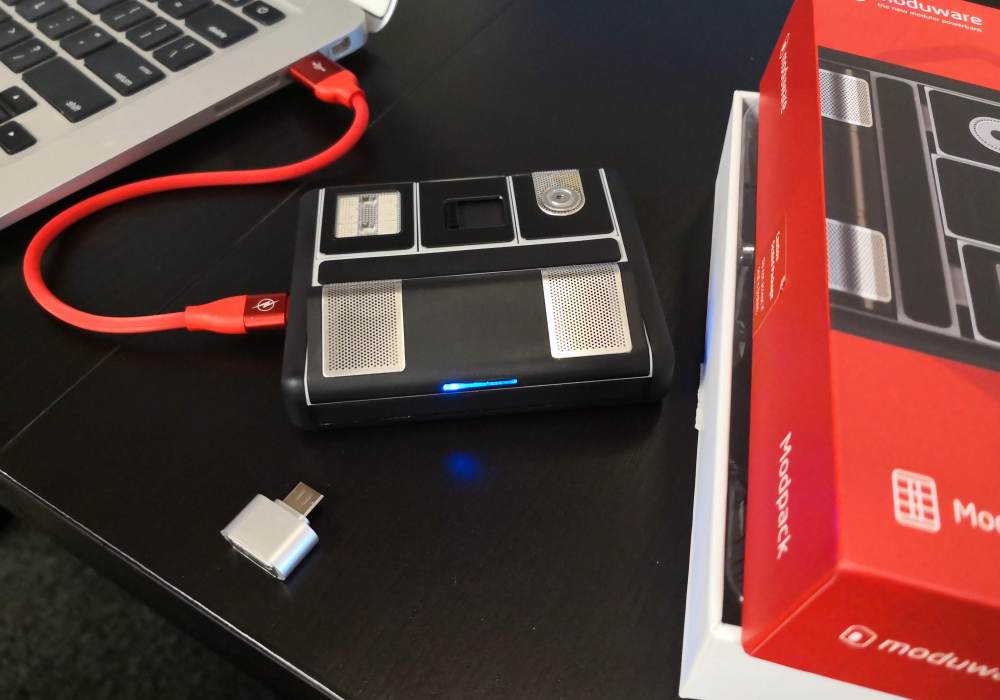
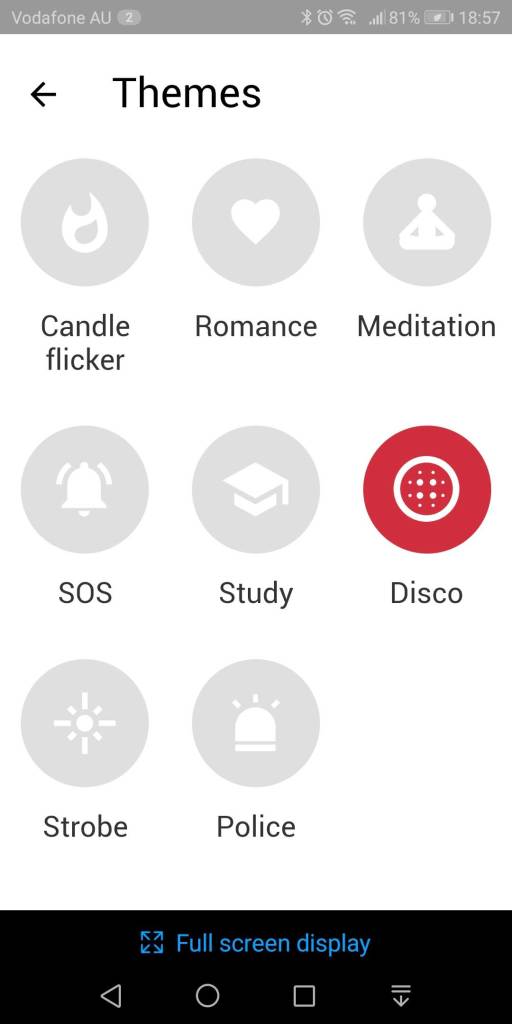
It’s LED night, and I’m immediately drawn to the ‘disco’ sequence, with my friend about twenty seconds ahead of me in doing the exact same thing.

The lag is caused by his Moduware base unit being on already, and my needing to locate the on switch for mine, which I establish by a process of elimination.

The ‘on’ switch has to be here somewhere…

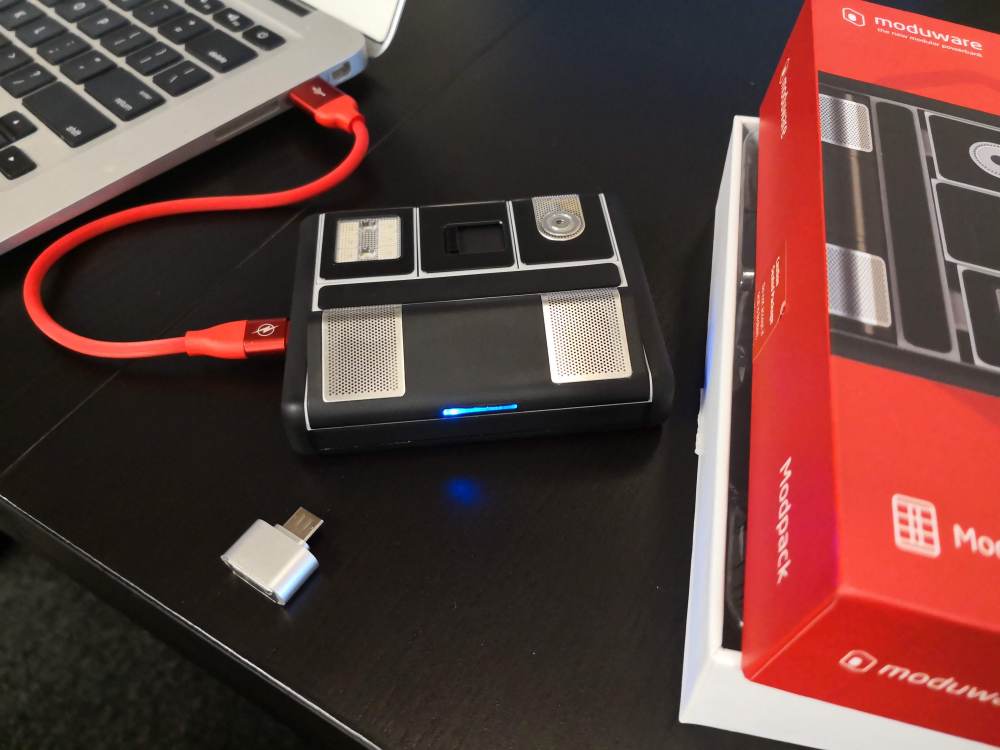
I press all the bits that look like buttons, before finding a panel the size of a phone nano sim card, that doesn’t really scream ‘pick me’ but proves to be the key to the castle.

Success.

I’m in.

Future events will centre on the other tiles that Moduware have developed.

Next month’s will look at the thermostat function, for example, that isn’t a thermometer but can tell ambient and surface temperature, up to a point. (Word of caution. It will melt and isn’t waterproof. So, it has some limitations.)

The breathlyser, digital projector and conferencing tiles; barometer and measurement tool, which I’m told can size up the dimensions of a space, and measure distance, without you needing to get up from your chair sound very promising.

I suggest that if it can do this, then it might be useful to helping one triangulate how best to pocket a billiard ball.  This is met with an eyebrow raise but the theory is not disputed.

I’m urged to go on Github, which I do have a registered account for, but have never accessed.

I’m not sure this it the exact right tipping point for me. I don’t play billiards all that often.

About Moduware

Moduware started life as a simple power pack, and it still serves this purpose. The product evolved from a phone case that proved to be nonviable, due to the rapid fire evolution of smart phone design, and the variety of brands in the market. It’s explained to me that the tiles augment one’s phone with hardware, the way that an application augments the phone’s existing functions with new software.Wireless speakers are the most relatable example of this in real life already.
When we open the packs, I notice that they are all named after Star Trek ships and this impresses Alex. So it should. He mentions that the product intent is to be a tricorder and I can see the potential, although it rather reminds me of a Sony Walkman and that is never a bad thing. (Retro tech is an emerging trend in my GenX opinion. Speaking as someone who collected vinyl in the 90s when everyone was chucking it away. )

The Where

WeWork takes up several levels of 401 Collins Street. It’s a co-working space with locations scattered globally.

I can see why digital nomads might not choose to come to Melbourne, given this prime CBD location. I imagine that cashed up millenial entrepreneurs and people wouldn’t travel to Melbourne if they had to co-work out at Maidstone or Boronia.Ballarat, Bendigo or Macedon might manage to pull it off.

Confusingly, there is no signage in the lobby or the lift telling us how to get to reception, so that’s a bit of a design fail.

When we do get in, (with Moduware’s help,) the look and lay out is uncannily familiar, largely because I spent a month at WeWork’s Medellin location, as part of grown up gap year. It’s dream like in some ways. Everything is here, but in a slightly different place.

WeWork offered free beer on tap in Medellin but only during business hours which I think says a lot about the Colombian work ethic. I don’t ask if they do that in Melbourne, because I don’t drink beer.

On reflection, I’m hard pressed to think of any multi-storey places that would fit the bill in St Kilda or Carlton or Fitzroy, so the CBD may have been the most obvious choice of location. WeWork inhabit nine storeys. About the same number as they did in Colombia. It must be the way we work works.

The Ask

Moduware is hoping to develop a developer community however it’s also conducting market research.

Influencing how tech companies develop new things is right up my alley so I am in my element.

My friend and I are interviewed separately and we are also filmed, responding to questions about whether we would use the tech, how much we would pay and what our ideas are for future developments.

Now you’re talking!

One of the motives behind the blog and this my TechPol renaissance is a quest to understand the future of work and how to influence technology and its ethical development. What better way than to do this than to meet with developers? Or be a developer?

There is a github for this, but on reflection I would like:

  • a casting tool. I mention this because I left my ChromeCast i Lisbon after loaning it to a flat mate and it is still on grown up gap year with the person who was going to get it back to me but prevented from doing this by an erupting volcano.
  • a way to integrate the breathalyser into a key fob to prevent the car from starting as this would mimic and enhance existing tech and a key ring option so that the tile can attach
  • A walkman style belt hook or a wrist watch bracelet so that you can wear your tiles like Scala and be hands free. This would also mean you could wear them through airport security which is a fun way of expanding any luggage allowance.
  • a speech to text function for recording random thoughts, that works like a communicator from Star Trek (TM). by activating a tile attached to the breast by a brooch.

The Sweetener

People who attend a Moduware workshop at WeWork receive a discount code and have the option of picking up their product from the office, thereby saving on the purchase of their Moduware and the shipping.

Links

https://moduware.com/

https://github.com/

https://brickset.com/sets/theme-Scala/subtheme-Jewellery