With a name like ‘Beyond the Gaussian,’ (aka the bell curve) there remains the fact that this is presented by the School of Maths and Statistics @unimelb.
I hear the sound of many low flying planes overhead. But: #systems and the promise of two universal truths… #giveitaburl
FREE PUBLIC LECTURE
Wednesday 07 Nov2018
5:00 pm – 6:00 pm
I’m several weeks into living as a digital nomad in my home town, Melbourne Australia.
As can be seen from the blog calendar, I’m successfully hacking the city, numerous times a day. Even if it isn’t strictly “digital”.
(All that matters is that it’s being blogged about. In certain quarters ‘that counts.’ It’s proof of digital life.)
For those of you who haven’t kept up, I spent 2017 and the first half of this year, traveling the world with some self-styled ‘digital nomads’, researching the future of work; ‘learning by doing,’ ticking off the bucket list and seeing and doing All of the Things.
Whilst I was out of the country, I’m reliably informed that I was ‘that friend’ on Facebook, the one with the status updates that leave you full of envy, and make you wonder how on Earth can they be doing this? So that was nice to learn when I got back.
No one ever tells you, when this is happening, that it’s going on. I’m not sure whether finding out I had an audience would have prompted me to get onto Instagram or not.
I don’t quite see the point of Instagram. I have a place I show pictures and a cloud where they are stored. We are done here, surely?
You only have to see my snaps from Venice; London; Budapest, Prague, Vietnam, Chiang Mai, Cuba, Buenos Aires, Mexico City, Las Vegas, Morocco and Peru to know that I had a wonderful time; (how could I not?) and that the worst part about this list, from your perspective anyway, is that it’s only some of the 23 countries I visited.
Hahaha. Yes. I am rubbing it in.
Across the year I learned:
life is too short to worry about a little old redundancy, and the problem that you will never own a house in Australia.
there’s a big difference between April and May in Cuba in terms of the weather and that difference is: torrential tropical rain;
one month in any given place, is barely enough time to find out all there is to know about a city that you want to, and ‘live like a local’ but you don’t know that when you first embark on this kind of a thing, and it seems as good a starting point as any.
Five weeks is enough time to:
work out how to catch public transport and whether Uber is available;
see the art and the streets of the city, and the shops if you want to;
work out a regular route for walking to and from home and the workplace;
have at least one deep and meaningful with your flatmate/s and one shared meal that you all cook together.
N.B at these events, it is important that you try to hide how weird you find it that they share so many details that you never wanted to know about their “Tinder date/s” (which is not what I am used to calling a one night stand);
see and do all the things on your list and perhaps meet one or two locals before it’s time to pack up again.
I have a gift for packing. It is a rare gift. Not something that many people share. This was unexpected, and the only people to rival me and my 32 kilos of consistently maintained weight are all of the men living out of their carry on sports bags, and wearing a selection of high rotation outfits consisting of one bathing suit, one hoodie, three t-shirts and the same number of pairs of underwear, socks and shorts. If you are not good a packing and would like packing lessons. I am available. I’m a big believer in things having a place for everything and a good reason for going. It’s BroElle. For luggage.
It is really nice having someone who makes your bed and cleans your house and does the laundry for you, and even more exciting to learn that this costs about the same per month as it would cost to be living at home in a share house with no such amenity. I want to thank all the people who provided these services.
the Neon Museum in Vegas was worth it;
there is nothing more Colombian than stumbling across an abandoned gram of coke on the footpath on a rainy night in Medellin, and the satisfaction of leaving where it lays, wondering whether you just avoided a police trap, to gladden the heart;
I would rather stab myself in the eyeballs than give up my time:
to write or read just or yet another travel blog; or
be in the company of any more woo-preneurs, for any reason*
Peruvians take their food very seriously, and they have a person whose job it is to count the three thousand varieties of potatoes that they like to boast of growing.
I did not get to the Amazon, but I did go to Central restaurant, Machu Picchu, and I did stand up paddle board in a gorgeous national park, in a science fiction landscape in the company of a sea lion, and I nailed it, as they say. I didn’t fall off, not once. I did that all on my own, and that is how you side trip. It is what they are for.
Hoi An in central Vietnam is the only place outside of Australia that I’ve visited more than once, and that I would visit again in a heartbeat. Yes, it has changed. A lot. It’s a lot busier, a lot noisier, and the tailoring is more expensive than it used to be, despite how many more tailors there are (and for that I blame the Europeans,) but there is an art to enjoying crowded places, and I find it easy to find peace and quiet and amazing food, if you want it.
If anyone would like to join me in Hoi An in June 2019 for a professional development travel workshop nomad trip: fifteen days of beach, sea, architecture, tailoring, cooking, biking, ruins and Agile, get in touch!
My message to you if you are in my shoes, and you are sans kids, sans job and sans mortgage:
Go for what’s achievable, especially if:
that thing is the only thing left on your bucket list to do;
work has always stood in the way of you getting it done, and suddenly, through the miracles of restructure, that’s no longer a problem, (with a lump sum to fund it); and
it comes with the added bonus that it can help you find a new home.
Hello Mexico City, Hoi An and Kuala Lumpur. I am looking at you!
On the dark side:
There is a certain amount of patience that’s required to deal with living at close quarters with a variety of people.
People have different expectations, and I am no different.
Or am I?
I wouldn’t say that I’m wilfully contrarian, in as much as it isn’t something I cultivate, (I don’t think, others may have a different view,) but I do find it really hard to just do what everyone else is doing, if it makes no sense or brings me no joy.
This latter idea is a concept the Japanese apparently practice and it forms the basis of Konmari, a decluttering practice in which the joy that something brings you is the measure of whether it should stay or go. (I think it’s wider implications: for life and people, are fairly evident but I need to write a book and call it BroElle. I am never going to write that book or read Marie Kondo’s stuff.)
The thing that I appreciated most about the year of travel with my nomads was that my apartments were all well appointed, fairly new and really comfortable; that when I landed, there was someone to hand me my key, my sim card, a bottle of water and take me straight to my home, with its bed, drinking water, towels and toilet paper ;and someone to book all of my flights, which is something I spend a lot of time doing, to ensure I get the best deal, sometimes at the expense of half a day seeing Venice, (for example). Then there was the friendships that I made with ‘the people like me’. This was more of a challenge.
The ‘people like me’ (or at least not wildly, unlike me, to the point of having nothing in common,) were seeking authenticity and honesty in their relationships and their own version of a great experience packed with whatever highs and lows, content, experience and personal and interpersonal challenges the day, the location or the month might bring.
The people not like me, made it really very hard for us to find one another. On the one hand, that’s OK. We were the odds ones out. But it took months of all of us tending to keep to ourselves, because we found it so hard to enjoy being in the bigger group.
The whole group consisted of mainly millennial, mainly Americans largely working in jobs that they didn’t seem to enjoy very much. They had every right to want to form a tribe.
But.
I have a thing I call “festival face.” It’s a face full of anticipation that’s searching in the distance for the fun at a street festival, while its wearer determinedly weaves, eyes fixed, through a crowd of people, who are also walking, but in the opposite direction, and all of whom are wearing the exact same expression. Festivals are mainly excuses to drink and eat in places that you’re normally not allowed to; to walk where cars would normally be, and that’s about it. But a festival is meant to be fun. And there’s the rub. How many of you are in the moment, right now, with your friends, having fun and how many of you are looking ahead, paying no mind to what is happening here and now and dragging your companions along a boring, busy determined path that you don’t know what’s at the end of it, or whether it’s worth it, in the expectation that if we all just keep moving forward then the fun will eventually present itself?
Examples of things that bring others joy, that I have to admit I just don’t enjoy, include following any kind of sport or sports team.
I don’t mind you having your passions, but it doesn’t or shouldn’t detract from your enjoyment that people around you don’t share them. The same as it doesn’t make you a bad person if you don’t like what I like, it is OK that I don’t enjoy watching sport.
But most of my tribe weren’t like that. They took it personally if someone didn’t “participate,” by which they meant follow the crowd in all of its things, all of the time. Bear in mind. This is a crowd pinging between excessive drinking, poor diet, the gym, one night stands, Netflix, selfies and all night dance parties.
I like art as much as most people like sport. My interest was sparked because I think I felt a bit sorry for art. As though not enough people like art. Compared to sport, it’s an underdog. My liking art reflects that I think it’s treated poorly. I think.
Now imagine a world in which art was discussed as often as sports is, and you will have some idea what it’s like for me to be around people who want me to like sport.
Why try to force the issue? I do understand that they probably just want me to share something they care about with them. And that’s great. It is. But here’s an idea: let’s find something that we have in common. Unless you’re robust enough to discuss what I don’t like about sport with me, knowing that I don’t enjoy it in which case, please proceed.
Ain’t nobody got time for catching up on twenty years of not paying attention to sport.
Returning to the subject to hand, I haven’t got the benefit of a lifetime growing up in America, with its weird social pressures to overshare, about some things, and stay silent about others.
I only have TV to go on, and obviously that would be sit coms, which are very instructive, but hardly complete in what they prepare you for.
(Did you know, for example, that it is more socially acceptable to tell someone the intimate details of your sex life, than to instigate a conversation about women’s rights, machismo, ethical volunteering, religious beliefs and practices, politics or cultural differences? By which I would mean, important things. interesting things. Things worth talking about. )
I loved traveling with the program, for its flexibility around my leaving my stuff while I wondered out into the world to do my own thing; and for taking care of the time consuming administrative stuff that left me free to fill in the gaps; and for the small number of organised group activities we had to choose from each month: hot air ballooning, sand surfing, cooking and cocktail making amongst them, but when you’re radically unlike the majority in a group and the group is plagued with people pulling festival face, I am going to notice, and call it as I see it.
I am paying for this once in a lifetime experience too, and I want what I paid for.
At times I had organisers demanding that I “participate” without defining what they meant by that. I asked. They didn’t clarify. If I did participate they seemed equally dissatisfied. Picture this: Day one, someone yelling “Woo!” a lot and expecting many of them back in return, when it’s 7am; I haven’t had coffee, and I have literally just recovered from three days of food poisoning (during which time not one of them enquired after my well being). Yeah. You can betcha I am going to shoot daggers at you.
I admit I did laugh when I was offered krav maga lessons from a short man with a faux hawk. Ha! No.
If I can see people using coercion in a workplace, to create an atmosphere of artificial, TV advertorial fake happy clapping; or else it’s clear to me that if I pause to pay attention and take the temperature of the room, there are people around me, who are faking that they are happy and in agreement, and having fun when really they’re not: it matters.
I weigh up my preparedness to join in, against what I am really feeling and what I can see is actually happening, and I respond accordingly and proportionately. Unless I haven’t had coffee. Then it’s just “a hard no” to most things until priorities have been taken care of.
Being two decades older than most of my companions (but by no means the oldest) and one of three Australians, in a group primarily made up of Americans, as well as someone used to traveling solo, who enjoys spending time in my own company, I expected to have to compromise.It’s only fair and reasonable and right.
It isn’t up to me to say one way or the other that I did or didn’t do compromise or come to the party enough, but I found myself keeping an eye out for risks that other people were taking enough to know that my goal of not taking responsibility for other people I didn’t have to was a good goal to set for me.
I travelled with young Americans, and unlike the Bowie song they seem to believe that aiming to be in an unnatural state of constant positivity is required of them, as without it they cannot be accepted or approved of. They won’t have friends and they are not likeable.
When we started drilling into feelings, at about month four, it transpired that a lot of them had not lead uncomplicated lives, in which nothing had ever gone wrong for them, that they should always have to be happy, and yet they saw this as something that was wrong with them that needed to be repressed, Exorcised through exercise, podcasts and colouring books.
What I found was a group of people perfectly willing to demand positivity, while bullying anyone not like them; who required everyone to think and act and speak a certain way; who couldn’t face reality if it was not nice or worse, if it was actually, very bad; and who lived their lives with blinkers on, censoring some things, but not others, out of fear of being disliked or judged and found wanting if they didn’t conform, and who spent time and energy pressing and coercing others into also self censoring and joining the pack, because if they didn’t succeed in this act, then they might have to face the consequences of their own choice to allow peers and authority figures to force them into being something they weren’t.
My peeps know who they are, and just because the whole group wasn’t whole, does not mean that anyone did anything wrong.
Unless it was before 7am and I have not had coffee…
What is a woo-preneur?
*A woo-preneur is a special type of man made disaster.
A human black hole, whose self-development arrested when they were pre-school aged, or possibly even, a baby, (if we’re being Lacanian about it.)
Generally, they “sell” something that nobody needs, and more often than not they are not actually generating any income from the work that they “do”.
They invest all of their energy into coming up with strategies and plans for duping the gullible into letting them have the things that they want, no matter the cost to the mark.
A fool and their money are soon parted is their modus operandi.
A woo-preneur drains other people’s wallets, time, resources, attention spans, and their will to live. They punctuate the schtick they spew, with an excited, cheerful and unjustified woot! No matter how at odds with what they’re really saying or feeling “woot” actually is.
They’re individuals who’ve convinced themselves that the only point to existence; the main reason we were given a life to live; is to take things that don’t belong to you, without any thought for whether you should, or could earn them, the way that your victim has; or any mind for the harm you may be doing.
There is no sense of your needing to be a better person than the worst person you can possibly be, as long as that person is self satisfied.
Woo-preneurs love neurolinguistic programming, (am I right? Do you know what I mean?) and Tony Robbins is almost always cited as a role model, (although the Kardashians are probably as big a template.)
They don’t seem to grasp the point of charity, or the concept of deserving-ness; what a work ethic is, or the idea of needing to earn the things that they want.
They aren’t lazy, because it takes energy to be this awful, but they do create the strong impression that they weren’t made to be self sufficient, fully formed, or politely ignored. Annoyingly, there is no amount of attention that could be paid to them, that they wouldn’t want more, but like Narcissus in front of the mirror, the most annoying thing about this ‘look at moi’ behaviour is that when you give them your attention, they do nothing with it. Once it’s paid to them, the fact of it seems to be enough.
They’re people whose aim is to have every relationship serving their needs: financial, emotional and physical, without reciprocity.
And some are better than others at playing the game.
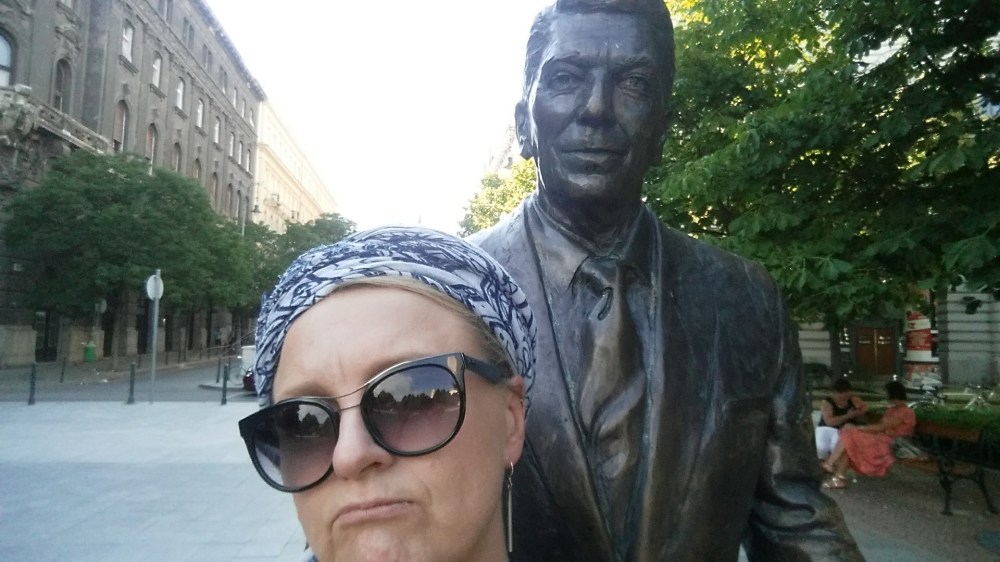
And here is me and righteous Ronald Reagan in Hungary. I am also, not quite sure why.
Before we get to that though, may I take a moment to dwell on the joy of hearing one’s name called out in a raffle draw?
It’s so unexpected that I would win something in a game of chance, that I am thrilled, and squealing like a child, even though there is a high probability that I will not be using my metaverse nails anytime soon, for reasons I can explain.
To put it simply, they’re fake nails. But, there’s more to them than that. Their point of difference, as explained by their creator, Thea Baumann, an Australian based in China, is a little more complicated.
They are “collectible fashion accessories powered by a 3D app: triggering hologram stickers you can wear, play, snap, and share.”
More significantly, they presage a future in which scanning people, animals, objects with a device will reveal something hidden about them, a bit like Pokemon Go, the next generation.
Imagine a world in which you can portray yourself the way you want others to see you, without limits. Except perhaps for screen size and processing power.
In the future 3D interactive holographics will augment your appearance whenever your wearables interface with the right app. All kinds of animations and effects will attach to you that you can show off and share them with others: starting with your wardrobe and make up: clothing, face and hair, but it could be a body part, a gender or species change; a virtual designer outfit; a character or spider webs an invisible lassoo, or a combination of all of the above.
Thar be dragons, furries, plushies and pony boys and girls. Also a lot of Cosplay.
Think of it as Second Life branching out beyond the confines of its universes, islands and worlds and into your smart phone. Anything that can only be seen in the realm between the online and meat world, or whatever terms you’re personally inclined to call the two locations, when they are not united in the metaverse.
The interesting thing that Thea has pulled off is to make something holographic dynamically adhere to a small curved surface, that is, a finger nail. In doing the hard yards first, the rest should be a walk in the park. Although it is still a very new and very digital art driven project at the moment.
As I mentioned earlier, there is a high probability that I will not be using my metaverse nails anytime soon, but that’s not their fault at all.
True. In real life the nails are heavy and plastic looking. The ones I’ve selected are neon pink and leopard printed (as opposed to the unicorns featured in the video, which were also an option) and it’s fair to say that they’re not really consistent with the environments I tend to work in, now that I don’t work in the arts. Then there is the fact that I am nearer to fifty than forty which is frankly, disgraceful.
But the bigger reason is that I am a confirmed nail fail.
The only reason I’ve never used fake nails, (and am unlikely to use these ones, aside from enjoying them being in pristine condition), is because I’m told that they leave your real nails in terrible condition. And believe me when I tell you that the last thing my existing nails need is to be even worse off than they are. I stopped biting them when I finished high school and despite another half a lifetime passing by, they remain steadfastly horrible, no matter how much attention and professional care is lavished on them. They are weak, prone to breaking and always uneven. They have a weird shape.
I am impressed by the tech and interested to see who turns out to be the market for pieces and I wonder what the coding and programming skills are that are necessary to design augmented fashion products.
I’m at the Council library in Docklands, which is a ruse designed to lure you to here, if only to see the corner of Bourke Street and Collins Street that simply shouldn’t be happening.
I’m here with someone who worked at Channel Nine when it first opened its doors, two blokes with projects that include hacking a voice assistant so that it turns the telly on, (which I’m astonished to find certain voice assistants don’t already do) and another who wants to automate a cricket scoreboard, because he’s last batsman and he’s sick of keeping score the long, hard way and another bloke in the same boat as me of wanting to understand how these buzzwords that are meant to alter life as we know it, except that he did electronics at University and I did arts.
It’s not that I’ve never seen a circuit before, but when I first encountered them at High School it was hit and miss whether I picked the right logic to get them doing what they were meant to. And they were all designs on paper.
We are here having a bit of a go with using Raspberry Pi.
Having recently complained about the lack of imagination technologists repeatedly demonstrate in the naming of things, I’m thrilled and delighted by the baking terms that Raspberry Pi uses, from its pi tops to its bread boards, to its Rasbian operating system, it’s cute and relatable.
Full marks!
In between interrogating people about their projects, and past lives, I’m learning to program an LED light, or more accurately program a switch and make a physical circuit for turning an LED on and off. Two different ways.
I follow the instructions and employ a magnifying glass to be able to see the tiny pins I’m plugging these wires into, and low and behold, it works, well, once I fix the syntax errors in the code it does. Doh!
The Pi was originally designed to be a simple computer, that you could plug into any screen. Like the telly.
Under the auspices of hacker and maker culture, Rasberry Pi now comes in a more fandangled version 3, that is more like a microprocessor, which is what an Arduino is, only it can be programmed to do several things, making it more fragile than an Arduino, which just does one thing at a time, really well.
I learn that microprocessors are the backbone of the internet of things (IoT), that the Arduino equivalent to Pi 3.0 is called Particle,and that a mesh network is a form of off web narrowcast network that relays data from sensors to processors do that machines and people can pick up on patterns and anomalies and make decisions about how to optimise things, (anything, but usually some thing specific) and all of the above has made attending totally worthwhile, without further ado.
Raspbian is a 2gig download and when installed it takes up 8 gig. It’s recommended that one saves it to a dedicated 8gb SD card.
There is also a ‘Lite: version.
An Arduino with internet access capabilities is IoT 101.
They do one thing repeatedly, really well
Pi is computational do it does multiple things. This makes Pi more fragile.
My LED circuit is complete and I have just created light on demand.
Sarah Richards spent 10 years working in the UK government, rising to head of content design for the Government Digital Service (GDS).
There she developed content design as a discipline for theGOV.UKwebsite and has authoredContent Design, a book for anyone creating user-centred content.
The road to catching up with all the shiny new things continues. This time it’s an ‘Introduction to Agile’ session at RMIT Activator.
The Activator is an incubator and it is the place for getting a brief introduction to almost anything that you’re not quite sure about, and want to get the low down on.
I cannot recommend it highly enough. (Although I do advocate that you BYO tea bags as the kitchen has mugs and hot water but no other provisions.)
RMIT’s Vice Chancellor Mr Bean ushered in the word ‘microcredential’ during the ‘Will Robots Eat Our Jobs‘ event and I’m predicting that RMIT’s teaching innovations will cause its graduates to rapidly rise up the employability rankings, because they’re all about gaining breadth knowledge and real world experience while you study your undergraduate degree.
Yes friends, that elusive mix of management insight and technical skill that universities previously didn’t teach you, because they were hoping you’d do what I did, and come back and do post-graduate studies, is now no longer. Industry has spoken, as has people’s willingness to forgo having a house in favour of paying back study debts, the way some did.
On to the subject at hand though:
TLDR
For a high level, jargon-free version of what Agile is, here’s the Wikipedia entry.
Lean is the mindset or ecosystem Toyota used to come up with ‘Just in Time‘ manufacturing ;
Electronic media is undermining people’s willingness to read, research and accurately understand and correctly cite academic antecedents (like the ones above).
Don’t take the knowledge I earned studying my Masters degree and snort laugh at it!
What did I learn?
That my Masters degree is still golden.
If you, like me, have studied an MBA or a Masters in Public Policy and Management, and taken it seriously (because it’s what you did instead of buying somewhere to live, for example,) then the one new thing and the fun new game that you most need to know how to play is ‘what strange, new name has someone rebranded what *I* learned to?’
The frameworks you know as:
plan do review;
forming, storming, norming, performing;
thin flat teams;
lateral thinking;
Just in Time;
process re-engineering; and
social action research;
(and probably others,) all have fun new names that are designed to make you deeply concerned that you may be out of touch, and irrelevant, when in reality the reverse may be true.
I’d like to think that the investments I’ve made in myself, in my studies and in acquiring wide experience, are at least a respectable match for a training company looking to sell me further professional development.
I have three and a half degrees: two bachelors, a Masters and a half a law degree, and not to harp on it, but they’re all paid for. Instead of doing something sensible, like buying somewhere to live, I learned. I learned a lot. I studied and I read and I compared and I contrasted and I found out the hard way that if you want the really good marks, then you really, really need, as a first port of call, to be capable of sourcing, quoting and citing respectable literature, accurately. This is especially the case, if you’re mounting an argument that completely contradicts your lecturer, and you want to get away with it.
If there is one thing that social media and short attention spans seem extremely ill suited to doing, it has to be the art of writing and researching ideas properly.
Hand on heart, I don’t mind hearing what you have to say, but please, please my millenial friends, don’t pass yourself off as an expert.
Please. Just. Don’t.
If you are someone who:
cannot tell your audience who or what the Deming of the ‘Deming cycle’ slide that you apparently cut and pasted from the internet and just projected on the wall refers to;
have cited both 7 Eleven and Amazon as virtuous paragons of ideal organisational culture several times now; and/or
don’t have any actual software development experience utilising Agile (which is as much as I do know about the origin story of the Agile method*) to speak of because your boss doesn’t think it’s important,; or worse
think that no one has ever given social action research a burl before, to know that it’s controversial; or that it’s been discredited and rejected as expensive, unreliable and open to abuse, we are going to need to work through all of this, before we start to see eye to eye.
I am not up for my everyday existence being turned into a snake oil fume fuelled advertorial from the Woopreneur school of confidence-artistry. I spent close to a year explaining this exact problem, at length, to a cluster of self proclaimed digital nomads who didn’t watch the news, and I am looking forward to being so old that people expect me to be mean and step out in front of cars without looking.
I am asking you to treat me with the respect that I have shown you. And for now at least, I am doing it nicely.
I’m going to go on the record with this, this, this…. objectionable, minimising, dehumanising feeling of being more than just a little put out by the treatment of me as being too old to be taken seriously when I say things like ‘that’s not new‘ to someone who gets all their information from social media, Goop and fictional news breaks featured within sitcoms and movies on Netflix.
Please don’t take the knowledge I earned studying my Masters degree and snort laugh at it. To find you snort laughing at me and my hard work and the hard earned knowledge that it resulted in, is not very nice. It’s ignorant and disrespectful.
What is they say about people who don’t learn the mistakes of history?
Agile is a software development tool, but like all good organising principles it’s just one way of looking at a problem.
It’s origins lie in the problem graphic designers know all too well, that the client doesn’t know what they want, but they do know what they like and wouldn’t it be great if just once everyone was on the same page, so that professionals stopped missing the mark with products that don’t meet client expectations.
ON that note here is something that might help with that. And it’s for clients.
If you missed Experimenta last night, do not despair. Check out this Meetup with RMIT Innovation and Entrepreneurship Research Group http://meetu.ps/e/FY1LD/66ySd/d
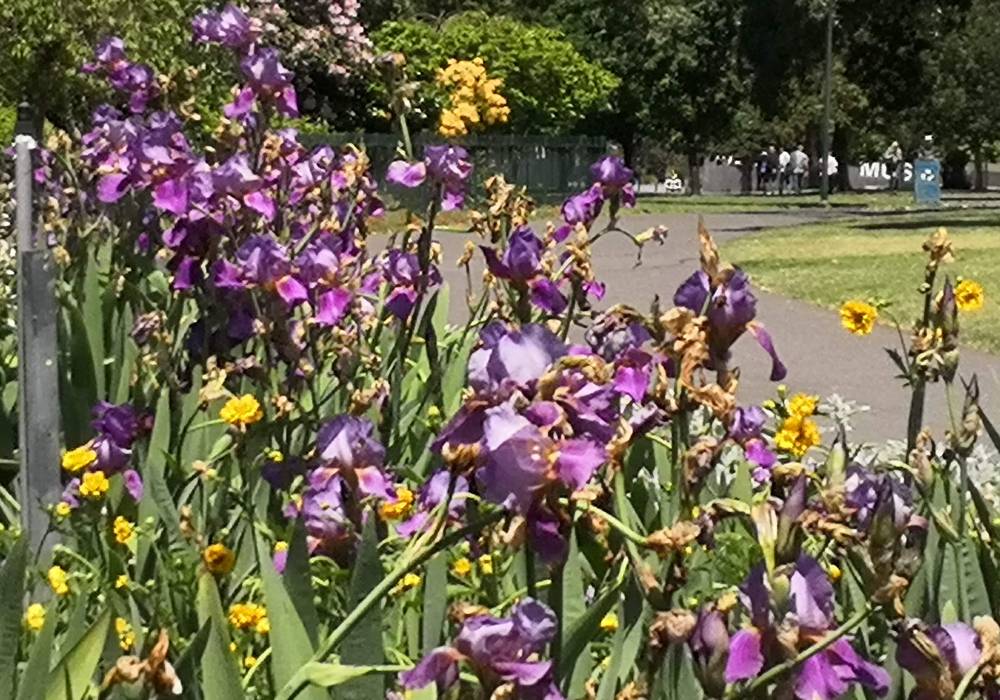
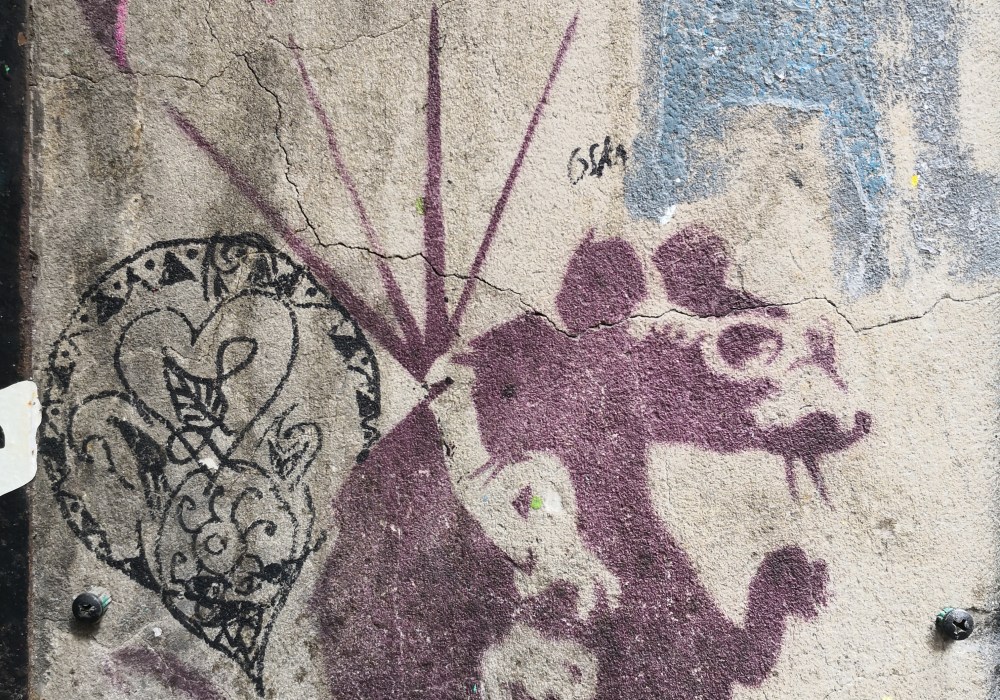
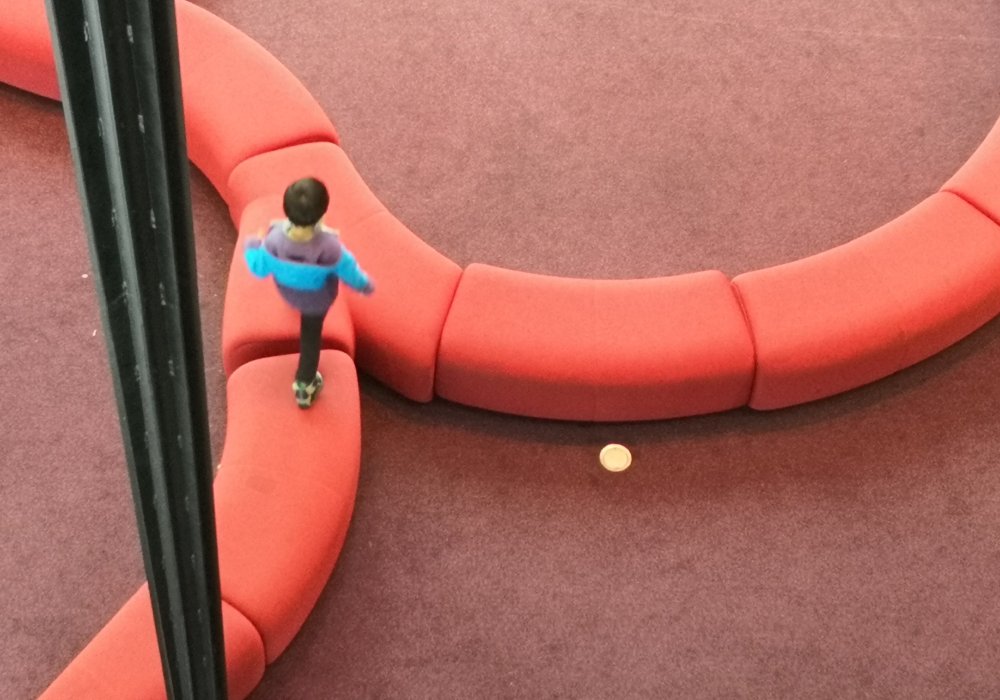

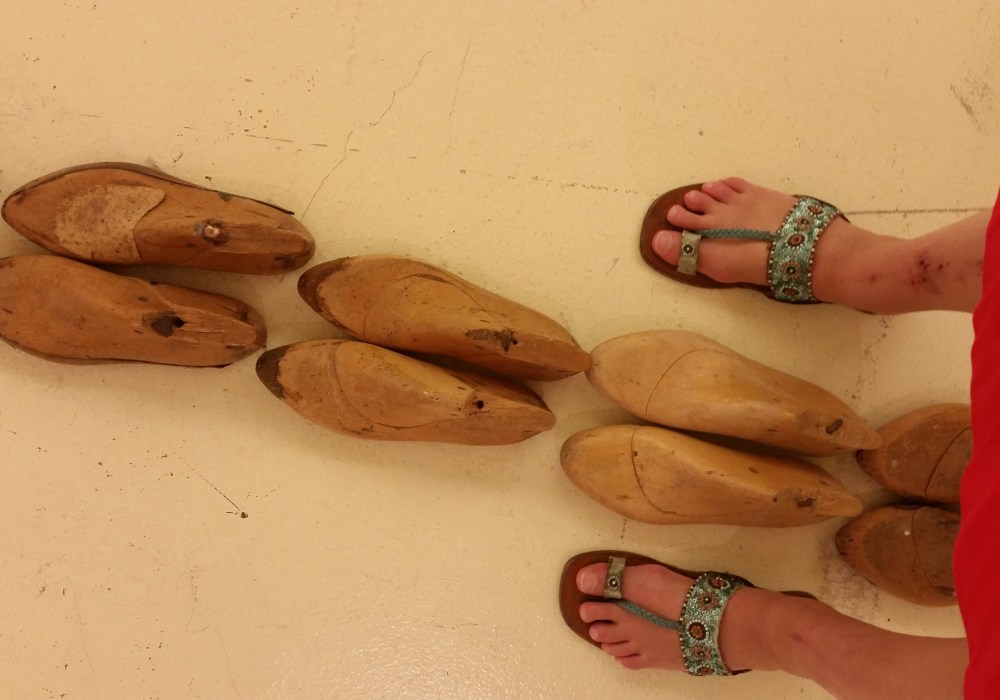

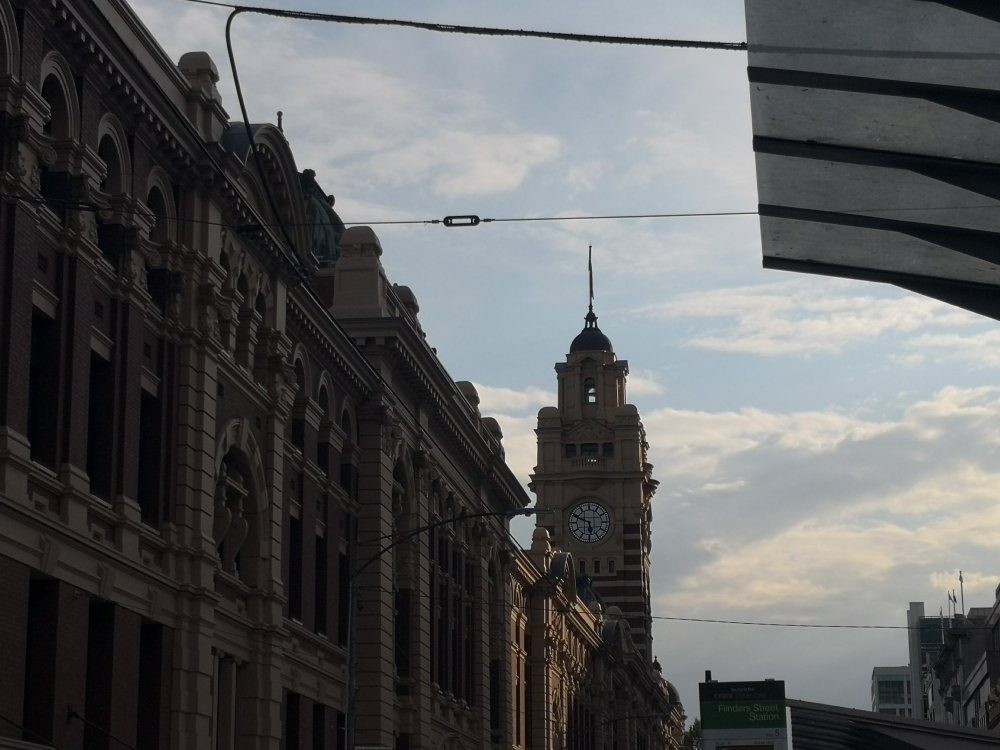
 This is what I love about Melbourne.
 Tech and the City
You must be logged in to post a comment.