“No one wants to participate in daily Turing tests.”- Dennis Mortensen, X.AI
TLDR
- In the future, you’ll visit the skill store, rather than the app store.
- AI bots are analogous to macros. Agents that automate simple tasks. You’ll download them and at some stage, they’ll work like an EA to tell you where you need to be; when and where and be able to rearrange your entire day, week, month and year and those of your family and employees.
- Chatbots should be declared. Customers should be told they are speaking with a machine.
- Technology needs some new words.
- In the future the machine adapts to you. Not you to the machine.
- Agents will interface and have unlimited answers. So the questions will matter.
The What
Conversational UI. This means Conversational User interface.
In plain English is means Alexa, or Siri, an agent that you interact with verbally. Like these guys are doing:
The Scots in the elevator asking for level eleven
The Where
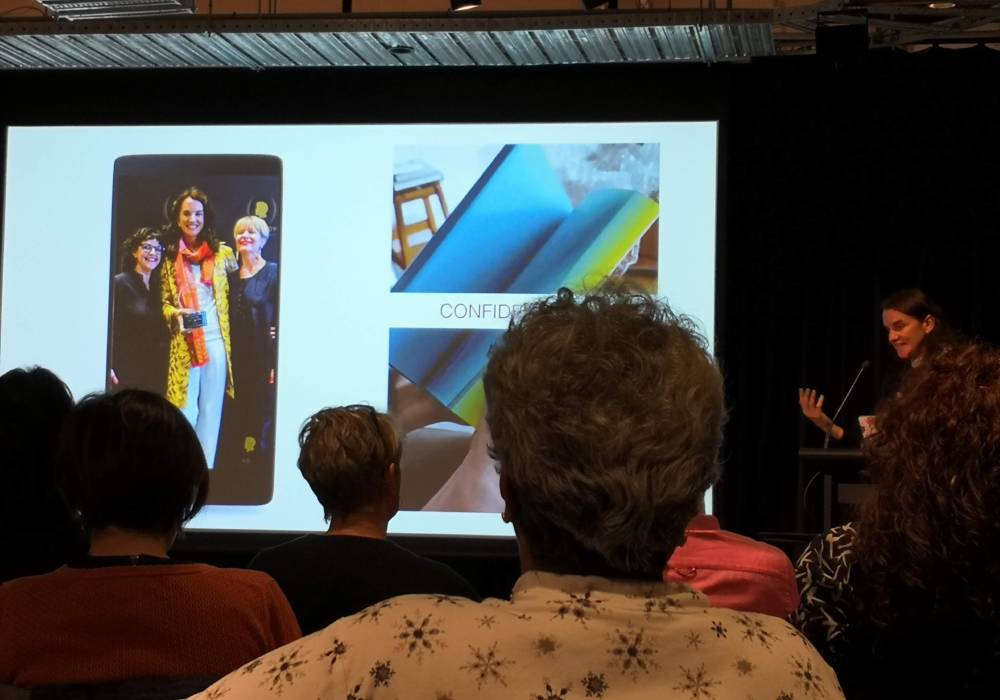
On the last day of winter, I venture in a different direction and into the City of Yarra.
Portable is a digital design and technology company, and an example of what my service design friends at Academy Xi referred to as “agency” (no pronoun required.)
Portable tell me that they’re interested in access to justice and various good causes. They have government clients too, which I always find interesting. Today’s talk centres on conversational user interfaces (called conversational UI, or voice activated commands and interactions) and is one of a series of talks that they’ll be hosting.
The next one is this Tuesday at 8:30am.
(Register here if you’re interested)
It will nominally be about infrastructure, but based on a typo that I found in the blurb, I’m really rather hoping that it touches on ‘technoclogy‘.
I’m greeted at the door by a cavoodle called ‘Pepe’, a ragamuffin who proceeds to treat my scarf, coat and fingers as oversize chew toys. Pepe punctuates the meeting with painful half pleas to his handler to be released immediately to at least look at the table with all of the food on it. (Breakfast is complimentary and consists of all kinds of yummy bagel and patissierie goodies that I wasn’t expecting. Much appreciated.)
The Details
I’m not sure what law this is, but for brevity’s sake let’s call it Perton’s law. The law being: ‘that which worked fine in rehearsal, will not work at all, when required to.’
It affects everyone in the cutting edge of technology space, presenting to a live audience ninety nine percent of the time and is directly proportional to the importance you’re placing on creating a good first impression.
The guest speaker is participating via video link from New York.
His name is Dennis Mortensen. The lag in the feed from New York makes Dennis, who is the Chief Executive of a virtual assistant company, seem as though he may himself be a programmed avatar.
Dennis speaks without moving his lips. He also has a Danish accent of the kind sci-fi films like to give to homicidal robot ladies and the generic neatness of every hipster in the tribe.
This is early morning performance art, and I’m not the only one to notice. The illusion that Dennis is Max Headroom incarnate makes at least one other person do a double take.
Uncanny!
Dennis’ company, X.AI, is an automated meeting scheduler and/or virtual assistant, that comes in two varieties, Andrew and Amy.
These are personal assistants. The kind that will mean you don’t have to employ an Executive Assistant (which I think underestimates the status symbol having an EA represents,) nor will you personally have to make your own dinner reservations only to be duped into speaking to the restaurant’s bot. (Just like the Google Duplex demonstration, demonstrated.)
Much of Dennis’ presentation covers agents, which he likens to macros, rather than the conversational bits of the interface, which is what I came here to hear about.
Bots will mutely automate a cluster of simple, but cumulatively, time consuming tasks, like scheduling and receipts and renewals. A bit like using auto suggest to fill in an online form or predictive text in an SMS or mobile document.*
Once developed, you’ll be able to install them, run them, and they’ll automate things like bookings, then, at some point, they’ll start speaking to one another, bot to bot and hopefully, be able to automate an entire sequence of events, building on your past choices and decisions. For example: an entire movie screen play or, less creatively, the flow on effects of a decision to push back a meeting (which is Dennis’ chosen example.)
In the future, your virtual assistant bot/s and the bots that your service providers deploy will communicate and arrange everything from your intial travel, car rental, hotel and insurance to extensions and extra insurance, and the recheduling of other appointments, and auto suggest places of interest that you might like to visit, or restaurants you might like to order from, (although you will still need to physically turn up and experience these in real time with NO setbacks along the way for this to operate at peak efficiency.
I have no words
The day opens with the admission that Artificial intelligence (AI) is “hard to define.”
This is an emerging theme. For the second or third time in as many weeks, I’m struck by thee lack of distinctive words capturing new developments in tech. There’s also a reticence to be definitive about concepts that borders on the incomprehensible.
For example: “ground zero.”
Really… that’s the best you can do?
Also “service redesign.” How can something to self evident be so difficult to define?
I’ve already noticed that this lack of vocabulary is resulting in the regurgitation of the same already borrowed, ill fitting words, to mean their exact opposite. For example: ‘hack’. This can be bad, as in “my account was hacked” or, it can be positive, because “hacks” are the outcomes of ‘hackathons’).
Dennis refers, without pause, or explanation to “disruption” by which he means an actual old school disruption, although I might not have called it that, back in the day.
Lately ‘disruption’ has been exclusively used in a positive way, when actually, at best it’s ambivalent and traditionally, it’s meant a temporary halt to proceedings.
The kind of disruption that Dennis means includes when a website hangs or the AI misunderstands either you, or your intention. (See the Scots in the elevator sketch for an example of this.)
At an event in July about the deployment of chatbots, one of the speakers, referred to “raw chicken moments.”
(Ghastly, I know, but wait.) A raw chicken moment is extremely relatable. It’s any time when your hands are full and you can’t use them to do things like answer the phone or press play, or speak on the intercom or touch the remote control, because what you’re doing is a bigger priority.
It’s during raw chicken moments that voice commands will come into their own.
I know I would appreciate my phone not ringing or pinging when I’m in the middle of something. Ie I’m having a raw chicken moment. There are times when I wish it would snooze, or mute, but I’m too busy to take the time to manually make it do this. If I could yell at my phone to go to voicemail, and it would do that, or go to assistant I’d appreciate it. Since I’m already yelling at it to shut up and stop interrupting in my head half the time, we are already more than half way there as far as me adapting is concerned.
First world problems?
One of the big bugs for agency, (as it is for management consultants) is time taken to track billable hours. To combat this opportunity cost, Portable are experimenting with Dennis’ AI agent.
For the record, I’m unclear how this automated bit of kit that, well, schedules meetings, takes less time to record billable hours than the humans whose hours it’s recording, but I do understand that it’s meant to leave said humans more time to work on things that generate income.
I hazard a guess that the bot includes middle ware that can evaluate the diary entry fields: ‘who’ the meeting was with and the duration of said meeting, generating a line item in the bill as a result. I guess that must be how it works…
I question whether the value proposition is so niche that it technically it poses a minimally unviable commercial problem.
in his opening gambit Moretensen relates a familiar tale. All you want to do when you land somewhere is find out where the food is, whether there’s a pool or laundry, and orient yourself.
Instead you wind up in the hotel room having to log in to the wifi, and then download an app and well…
I like that Dennis is against businesses creating in house apps, (especially when a website would do just as well, looking at you booking.com and Air BnB and Culture Trip).
I like that he is against the the time, data and phone storage waste that apps represent to a user
As we established earlier in the series, I’m a thin client,low code limited app kinda gal. This is because storage was at a bit of a premium during my recent trip overseas, due to the age of the phones I took with me. I have no time for pig path apps, with bloated code, and the impact they have.
But.
Dennis solution is to install an Alexa in every room, so that as we unpack we can ask questions and multi task, which is great. But. He is also forgetting that hotels have real live concierges, porters and sometimes butlers (thank you Raffles) as well as direct dial in house phones with speaker functions…things that users are already used to using and expect to have access to.
So, he’s missing a trick a bit with that suggestion.
Questions and Answers.
Do we need to know whether the thing on the other end of the line is human or not?
Dennis thinks disclosure is important, but if you’re in any doubt the test to apply is “what can I win and what can I lose?”
This is a test that any reasonable human being interested in doing a good job ought to be asking All. The. Time.
He adss that business is all about trust. People find it weird to be subjected to daily Turing tests, so don’t be weird.
Are we moving towards a post human future?
No.
*Dennis briefly touches on motor vehicle AI and how it “dissappears.” I’m not sure I grasp what he means, but I will say that auto drive presents it’s own unique challenges vis a vis hacking and desirability. If people liked safe driving we wouldn’t have car culture.
People like status symbols and risk taking. To be robust the business / MVP / user case has to factor human factors in.
-37.797798
144.985236






 Tech and the City
You must be logged in to post a comment.